Why did you write the book, Texas Water 101: Forging Resilience Through Innovation and Adaptation?
As the principal author of Texas Water 101 I want those interested in the Texas dream to be aware of the issues at hand in a state that is very growth oriented and is fortunate to have the land area, government and economy spurring economic opportunity. BUT, there are limits to what the state can accommodate and it cannot and will not continue as it has historically. Texas has seen a lot of boom and busts in its economic cycle and with weather volatility. This will continue. The state has to become more serious in how it balances growth, development, while reducing the risks of unbridled development. Government and the market economy including advancing technology can play a vital role in helping limit the risks and advancing the rewards that could lie ahead.
A main motivator for this volume is that there is a lot of data, activity and government infrastructure available to help get a sense of what is going on. The State’s Five Year Water Plan is a key reference for defining Texas policy, programs and investments. More money is being devoted to addressing the far ranging risks that exist from climate change, weather volatility, diverse river basins and geophysical regions with unique weather conditions. A lot of effort will be needed to addressing the growing gap between current available water sources and the gaps of supply that lie ahead between now and 2070. Greater public participation will be needed to arrive at the most rational policies for the state based on regional differences.
Where does one go to get data on Texas water conditions?
The Texas Water Development Board (TWDB) is the best repository on viewing and tracking Texas water trends, policies and programs. Federal agencies and universities are also good sources of data. But, it takes time and effort to know where to find it, to get it and use it. This was one of my early issues starting my work and attention on Texas water. Throughout my experience in energy and water a starting point in understanding natural resource conditions begins with DATA. Understanding the Texas water supply chain by region and understanding regional conditions is critical to contributing to the debate on what is best for each region and Texas as a whole.
Texas has a unique planning process. It involves both top-down and bottom up input on the planning methodology, situational assessment, risks and options and forging a plan of action. Just look at the number of noted participants involved in the forward of the Texas 2022 Water Plan. Once the regional input is obtained then this is synthesized into an integrated state plan. It also takes time to understand this process.
What issues and risks exist regarding the supply and use of Texas water?
What more can Texas do to improve its approach to water planning and management?
This will evolve over time. The planning and policies will likely become more contentious over time as regional perspectives and disparities become more extreme, and they will, unless “mother nature” improves the situation, but forecasts suggests that this may not happen soon. Already longstanding historical water consumers are contesting new water use proposals. Water districts are contesting higher uses and unbridled development. More scruitiny is needed on new water development and use, especially with the advancing high tech data server sites, and chip wafer manufacturing. AI is obviously a key driver of this with new developments heavily impacting local water districts. Issues will become more complicated and balancing historical uses to new developments will be greater. This will also impose more purvasive risks to the entire consumer and business communities. Large state institutional water uses may be exposed to great risks such as the Texas university system and Texas Department of Criminal Justice.
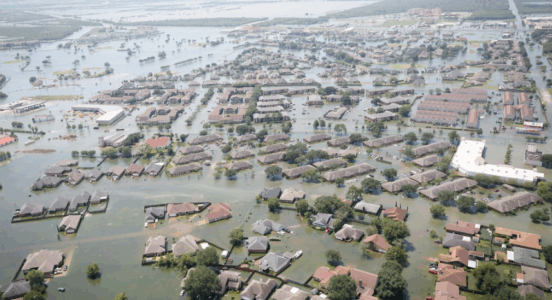
Three things need to be carefully watched: How well Texas policymakers at all levels address and follow through with the known risks like flash flood protection, the growing land subsistence, and limited scale and capability of the many water districts and authorities to balance water supply, demand and quality. If Texas is planning on larger mega water supply projects, including new water reservoirs, desalination and water transmission from more plentiful regions to constrained regions, this will require more scale and analytical horsepower. The current water governance structure will struggle in dealing with these issues.
There also has to be more benchmarking and tighter control on managing water losses through better control, coordination and oversight of leak detection efforts. Some recent attempts have been made on verification audits and progress mitigating reduced leakage is a condition of grant awards, much more need to be done.
What lessons can be learned by following how others have addressed their water problems?
A number of books have been written on how civilizations have responded to climate or environmental induced changes. Notable books that stand out are The Limits to Growth by Donella H. Meadows, et. al. , The Human Prospect by Robert Heilbroner, Small is Beautiful by E.F. Schumacher, and Collapse: How Societies Choose to Fail or Succeed by Jared Diamond. There are many lessons that can be learned and used as background perspectives and strategies on the similar risks that Texas is facing. I will leave it here for others to think about this and what it means to them. But there is the other side too, which acknowledges with history behind it that massive capital projects have a role to play such as the Hoover Dam, California Aqueducts, the current flood protection levies in Southeast Texas and Gulf Coast, and the build up of the inland water ways of America. Not to mention the huge natural gas and petroleum pipeline network in this country. Major capital projects are needed and have a role. This is also evident with strong economies in the Middle East like the United Arab Emirates, where they have large combined water desalination plants co-located with large natural gas combined cycle power plants and a water distribution system of the size on oil and gas pipelines. This all is possible. There is also the example of Israel which recycles about 98 percent of its water. Solving Texas’s water problems will take imagination, discovery and innovation to solve the water problems that lie ahead. It will also take lots of data, math, engineering, and creative financial solutions to pave the way.
By way of summary, here is an AI supported search on the implications of these notable works and the implications for Texas:
What periodicals should I subscribe to and follow to keep track on Texas water issues?
Those interested in following Texas water issues are encouraged to set up news feeds that give automatic updates on the issues at hand. Google Alerts tied to various key words on Texas water are very useful. Plus follow the RSS feeds on this web site and others.
Notable sources of information on Texas water include major local broadcast media including newspapers and local television networks, the Texas Water Development Board, The Texas Tribune, Texas Monthly and news outlets by various public and private interest groups. Check the bibliography on this web page on various links to articles that appear. Routine updates to article links and listings will occur.